

Orbital Data Centers: Feasibility Analysis of the Space-Based Computing Concept
author: Hover Technology
2026-06-01
Emerging technological concepts continuously capture public and industrial attention across the tech industry. While some innovative ideas deliver transformative value for industrial development, others merely represent incremental technical upgrades. Restricted by current technical limitations, excessive costs and practical operational constraints, most radical futuristic technological concepts fail to achieve large-scale commercial implementation.
The space solar power transmission scheme is a typical example. Once a trending technological hotspot, the concept gradually faded from mainstream attention after in-depth demonstrations of its technical details, cost structure and practical return on investment. Many such ambitious ideas resurface periodically every few years, and the latest emerging contender is orbital data centers, also known as in-orbit computing.
Leading tech and aerospace players including SpaceX, Google, NVIDIA and multiple industry startups have launched systematic research and feasibility discussions on space-based data center solutions. The core rationale behind the concept is straightforward: terrestrial data centers consume massive amounts of grid electricity and place enormous pressure on ground power supply systems. In-orbit computing facilities can directly harness sustainable solar energy, effectively alleviating the power consumption burden of ground infrastructure.
Nevertheless, the seemingly promising solution faces numerous unresolved practical challenges, and its overall landing value remains questionable. According to rough industry estimates, the construction and operation costs of space-based data centers are 3 to 10 times higher than traditional terrestrial data centers, creating a massive economic threshold for commercial adoption.
Core Bottlenecks: Power Supply and Thermal Management
Current technical conditions make the large-scale implementation of orbital data centers extremely difficult. The concept inherits all the drawbacks of the space solar power transmission scheme, while introducing a new set of complex challenges covering hardware space adaptation, launch and deployment, on-orbit operation and maintenance, photoelectric conversion efficiency and extreme thermal management.
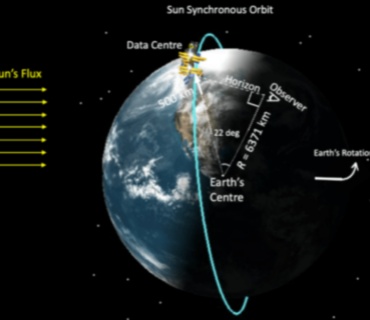
Even small-scale in-orbit edge computing modules feature far higher power consumption than traditional miniature satellite equipment, requiring large-area solar panel arrays to sustain stable power supply. To ensure continuous illumination and power generation, orbital devices usually need to operate near the Earth’s terminator zone. Meanwhile, energy storage batteries are indispensable to cope with power supply fluctuations caused by periodic illumination switches and orbital environment changes.
Beyond power supply constraints, thermal management stands as another critical technical bottleneck. Terrestrial data centers rely on air convection and heat conduction for efficient heat dissipation, both of which are unavailable in the vacuum space environment. In-orbit devices can only dissipate heat through thermal radiation. Compounding the difficulty is the extreme temperature difference in orbit: one side of the equipment is exposed to intense solar radiation with ultra-high temperatures, while the other side faces the ultra-low temperature vacuum space, creating harsh conditions for precise and stable thermal system design.

In contrast, although terrestrial data centers incur high costs in power consumption, heat dissipation and daily operation, they benefit from mature industrial systems, complete supporting facilities and controllable operational risks. Shifting data center infrastructure to space will drastically elevate construction and operational costs, introduce numerous uncontrollable environmental and technical risks, and bear the substantial high expenses of rocket launch and orbital deployment.
At present, the orbital data center is more suitable as a directional engineering research and academic discussion topic. Even if all technical challenges are overcome, comprehensive trade-offs between huge investment and practical operational returns are still required to verify its real industrial application value.
Disclaimer :
This article is for industry information reference and academic discussion purposes only. All views, data and analysis conclusions involved in the article are derived from public industry information and preliminary industrial estimates, and do not constitute any commercial investment advice, technical implementation guidance or industry standard basis. The author and the website are not liable for any decisions and losses arising from the application of the content of this article.
2026 IPC CEMAC Electronics Manufacturing Annual Conference to Kick Off in Shanghai in September
China Launches National Digital Identity System for Humanoid Robots
Related Article
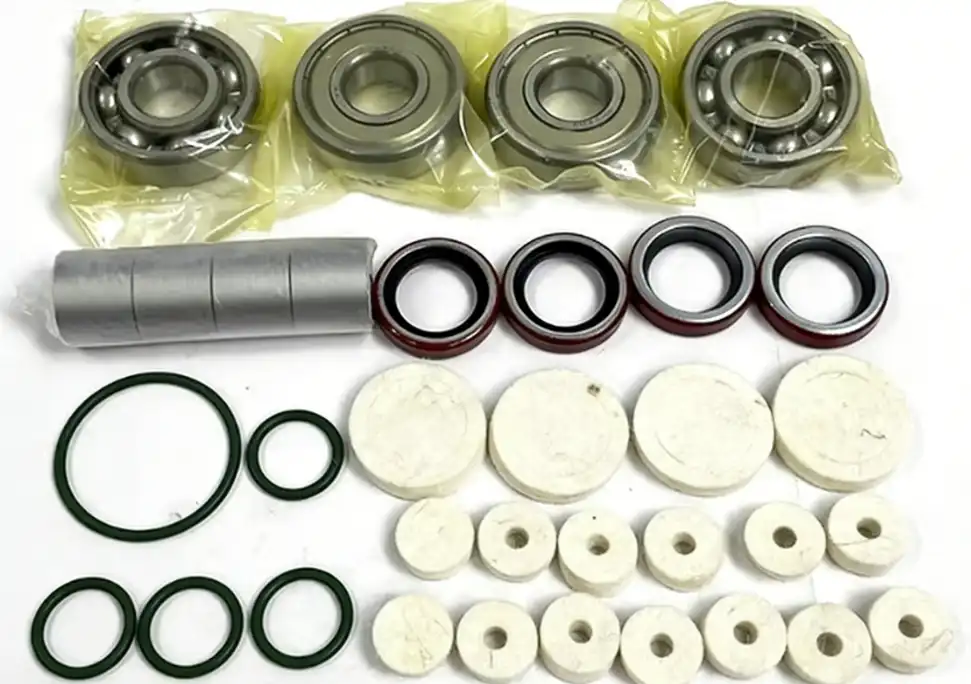
The Edwards A30151820 Module Kit is a comprehensive maintenance replacement solution designed for Edwards EH250, EH500A, QMB250, and QMB500A mechanical booster vacuum pumps. Engineered to restore factory tolerances and prevent vacuum leaks, this all-in-one overhaul kit includes high-precision ball bearings, durable dynamic shaft seals, heat-resistant O-rings, and oil-absorption felt pads for extended operating life.
Keep Your EH/QMB250/500A Pumps Running: Edwards A30151820 Module Kit in Stock
Agri-Core No.1, China’s first homegrown LoongArch agricultural SoC, has taped out. This industrial-grade chip resists heat, corrosion, and vibration, solving import reliance and interface mismatches for reliable farm machinery operation in harsh fields.
China's First LoongArch-Based Agricultural SoC -Agri-Core No.1- Successfully Tape-Outs, Breaking Import Dependence for Smart Farming Chips