


How Deep Tech Survives: The Boston Dynamics Story and What It Teaches Us
author: Hover Technology
2026-02-18

Boston Dynamics, the U.S. robotics company behind Atlas, has never achieved sustained profitability since its founding in 1992. Even after Hyundai Motor Group acquired it for approximately $1.1 billion in 2021, the company has accumulated losses exceeding 1.2 trillion KRW over the past four years. If this company were rooted in Korea, it would likely have been labeled a "zombie enterprise" and eliminated within five years. The question is: How does deep tech survive in America?
The DARPA Model: Funding Failure as a Strategy
Boston Dynamics originated from MIT's "Leg Lab," spun off by Professor Marc Raibert in 1992. In an era when robots were largely confined to science fiction, the company's survival depended almost entirely on government funding—not as one-time grants, but as sustained research contracts from DARPA.
DARPA is widely recognized as the cradle of American hard tech. The agency invests heavily in high-risk, high-failure projects. A 2016 DARPA white paper stated: "If our programs have no failures, that means we are not taking enough risks." The agency has long tolerated failure rates as high as 90%. It was under this philosophy that Boston Dynamics developed BigDog in 2005 and the first Atlas bipedal robot in 2013—without any pressure for immediate commercialization.
The Capital Continuum: From Government to Corporate Stewardship
In the 2010s, robotics entered the investment radar of big tech. Google acquired Boston Dynamics in 2013 for $500 million, followed by SoftBank Vision Fund in 2017, and finally Hyundai Motor Group in 2021. Each transition provided a new "capital greenhouse," allowing the technology to mature across three distinct phases: academic seeding, government nurturing, and industrial scaling. Today, Atlas stands on the threshold of mass production.
A Tale of Two Ecosystems: Korea vs. United States
The contrast with Korea is stark. In Korea, university spin-offs face immense barriers. Government funding for long-term research without visible成果 is rare. Large corporations acquiring startups remains exceptional: only 3-4% of Korean startups exit through M&A, compared to nearly 90% in the U.S. IPOs are virtually the only viable exit path.
Regulatory hurdles are a key bottleneck. When Korean conglomerates acquire domestic startups, they face stringent affiliate regulations and fiduciary liability risks if performance falters. The resale market for acquired firms is also limited. In such an environment, deep tech startups struggle to take root, let alone survive for decades.
Conclusion: Patience, Not Events, Builds Giants
Korea's recent startup initiatives are welcome steps, but we must not confuse events with ecosystems. World-class deep tech is not built on glossy competitions. It requires patient capital that tolerates failure and institutional frameworks that enable such patience. The Boston Dynamics story is not about a single company—it is about a system that allows tomorrow's technologies to be imagined, funded, and finally realized, even if it takes 34 years.
Disclaimer: This article synthesizes information from public sources regarding Boston Dynamics' history, DARPA's funding model, and comparative startup ecosystems. All financial figures and historical facts are cited as reported and are subject to change. This content is for informational and analytical purposes only and does not constitute investment advice or policy recommendations.
Beyond the Hype: Only 12% of CEOs See Both Revenue and Cost Gains from AI, PwC Survey Finds
National Supercomputing Internet Launches Core Node, Offering 30,000+ Domestic AI Chips in Trial Run
Related Article
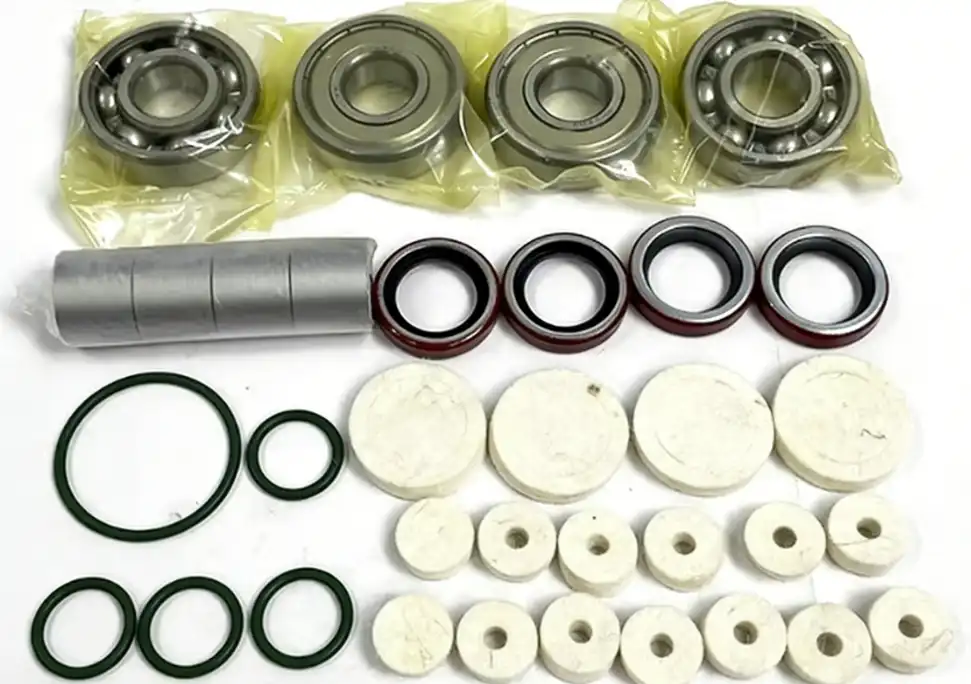
The Edwards A30151820 Module Kit is a comprehensive maintenance replacement solution designed for Edwards EH250, EH500A, QMB250, and QMB500A mechanical booster vacuum pumps. Engineered to restore factory tolerances and prevent vacuum leaks, this all-in-one overhaul kit includes high-precision ball bearings, durable dynamic shaft seals, heat-resistant O-rings, and oil-absorption felt pads for extended operating life.
Keep Your EH/QMB250/500A Pumps Running: Edwards A30151820 Module Kit in Stock

Agri-Core No.1, China’s first homegrown LoongArch agricultural SoC, has taped out. This industrial-grade chip resists heat, corrosion, and vibration, solving import reliance and interface mismatches for reliable farm machinery operation in harsh fields.
China's First LoongArch-Based Agricultural SoC -Agri-Core No.1- Successfully Tape-Outs, Breaking Import Dependence for Smart Farming Chips