


SMIC Accelerates 7nm and "5nm-Like" Chip Capacity Expansion to Meet AI Chip Demand
author: Hover Technology
2026-03-05

According to a report by Nikkei Asia, Semiconductor Manufacturing International Corporation (SMIC), Hua Hong Semiconductor, and several other chip manufacturers are ramping up efforts to expand advanced process chip capacity. The goal is to multiply the output of 7nm and "5nm-like" chips several times over to meet China's surging demand for AI chips .
Ambitious Capacity Expansion Targets
China plans to increase its relatively advanced chip production from the current less than 20,000 wafers per month to 100,000 wafers within the next one to two years. Looking further ahead, the long-term objective is to add 500,000 wafers of capacity by 2030 . This represents a potential fivefold increase in the short term and a 25-fold increase over the next five years .
According to industry research institutions, SMIC's advanced process monthly capacity is expected to approach 50,000 wafers in 2025 . The company continues to expand its advanced process production lines in Shanghai, Shenzhen, and Beijing .
Technological Breakthroughs Under Restrictions
Despite ongoing U.S. export controls that prevent China from accessing ASML's extreme ultraviolet (EUV) lithography equipment, SMIC has made significant progress. Sources reveal that SMIC is developing "5nm-like" technology, with its N+3 process already being used to produce Huawei's latest Kirin 9030 mobile processors and Ascend AI chips .
The N+3 process is an enhanced version of 7nm technology that delivers performance approaching that of 5nm chips . This achievement is particularly noteworthy given that Chinese manufacturers must rely on existing deep ultraviolet (DUV) equipment and technical optimization rather than EUV tools . SMIC's Co-CEO Liang Mengsong serves as Chief Technical Advisor, responsible for replicating near-7nm process technology at the Beijing factory .
Industry-Wide Push
Hua Hong Semiconductor, traditionally focused on mature processes, has also begun venturing into advanced chip manufacturing under pressure from central and local governments . The company is working to join the advanced chip supply chain, with Huawei providing technical support for this transformation .
Several Huawei-affiliated chipmakers in southern China are preparing to manufacture advanced-node chips to support the development of an AI data center ecosystem. One such firm, PengXinWei, has become a key R&D base for Huawei's chip development and pilot production lines. Another company, Dongguan Guangmao Technologies, established in late 2023, has already set its sights on producing chips more advanced than 10nm .
Huawei's Dominant Position
Huawei enjoys the highest priority in capacity allocation, followed by Cambricon, Alibaba's T-Head, Moore Threads, and others . Huawei plans to launch its Ascend 950 series chips in 2026, further strengthening domestic computing capabilities . According to Bloomberg, Huawei aims to approximately double its Ascend chip output in 2026, targeting as many as 1.6 million dies .
Challenges Remain
Despite these ambitious plans, significant challenges persist. Domestic equipment performance still lags behind foreign manufacturers, creating a major bottleneck for capacity expansion . Morgan Stanley estimated last year that SMIC's 7nm process yield was only around 30% .
Additionally, SMIC's Co-CEO Zhao Haijun recently noted that while the company has pre-purchased some key equipment, supporting systems have not yet arrived, creating a timing gap that may prevent some equipment from contributing to production this year .
Global Market Position
Despite these challenges, SMIC has risen to become the world's third-largest foundry by revenue in the third quarter of 2025, trailing only TSMC and Samsung Electronics. Hua Hong placed seventh, moving into the ranks of major international players such as GlobalFoundries and UMC .
Disclaimer: This article is for informational purposes only and is compiled from public sources including Nikkei Asia and other industry publications. While we strive for accuracy, we cannot guarantee the completeness or reliability of the information. Any forward-looking statements are based on current expectations and involve risks and uncertainties. The views expressed in this article do not constitute investment advice. Readers should conduct their own research before making any decisions.
Google Unveils Audio Glasses with Gemini AI, Launching Fall 2026
Unitree CEO: Humanoid Robots Now at "10-Year-Old Child Level," Mass Adoption 3–5 Years Away
Related Article
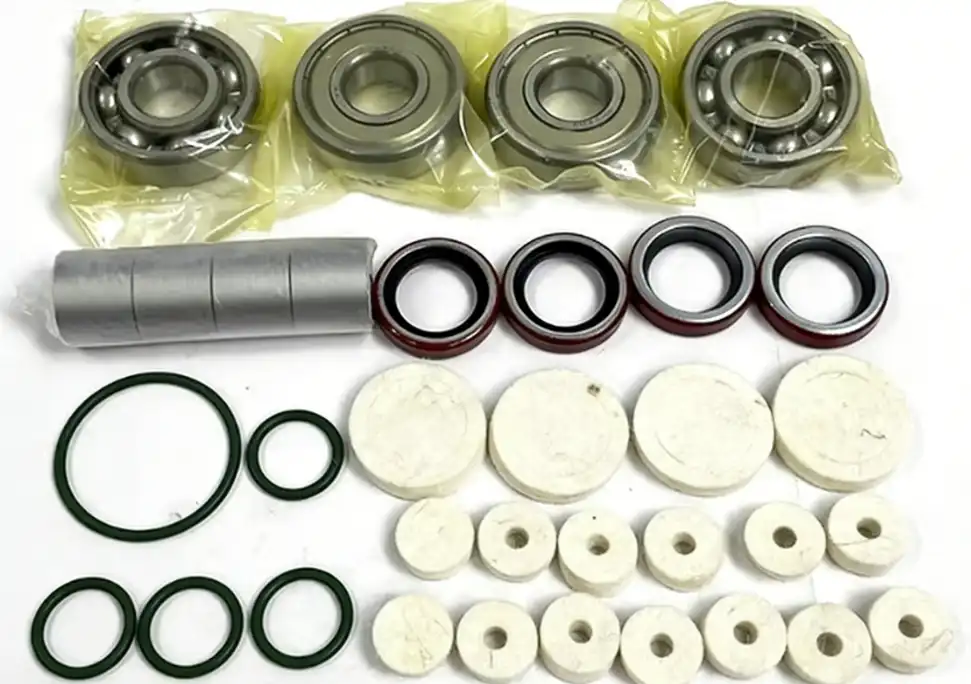
The Edwards A30151820 Module Kit is a comprehensive maintenance replacement solution designed for Edwards EH250, EH500A, QMB250, and QMB500A mechanical booster vacuum pumps. Engineered to restore factory tolerances and prevent vacuum leaks, this all-in-one overhaul kit includes high-precision ball bearings, durable dynamic shaft seals, heat-resistant O-rings, and oil-absorption felt pads for extended operating life.
Keep Your EH/QMB250/500A Pumps Running: Edwards A30151820 Module Kit in Stock

Agri-Core No.1, China’s first homegrown LoongArch agricultural SoC, has taped out. This industrial-grade chip resists heat, corrosion, and vibration, solving import reliance and interface mismatches for reliable farm machinery operation in harsh fields.
China's First LoongArch-Based Agricultural SoC -Agri-Core No.1- Successfully Tape-Outs, Breaking Import Dependence for Smart Farming Chips