


China Launches National Digital Identity System for Humanoid Robots
author: Hover Technology
2026-05-28

The management system is coordinated by the Humanoid Robot and Embodied Intelligence Standardization Organization, a body under the Ministry of Industry and Information Technology (MIIT). To date, more than 100 domestic humanoid robot manufacturers have participated in the initiative. Approximately 200 robot models, totaling over 28,000 units, have already completed digital identity registration.
According to the official specification, the digital identification code consists of multiple parts:
-
2-digit cross-border identification code
-
4-digit manufacturer code
-
6-digit product classification code
-
17-digit device-specific serial number
Authorities have also issued complementary management rules, detailing requirements for registration, monitoring, and traceability throughout the robot’s service life.
Humanoid robots have been designated a strategic technological priority in China. Currently, domestically produced units are primarily used in universities, research institutions, and industrial settings. Industry observers expect future applications to expand into elderly care, home companionship, hotel services, public services, and other commercial domains.
Domestic robotics firms are accelerating supply chain localization to reduce technological dependence on foreign sources. However, technical challenges remain. Most current humanoid robots still face limitations in autonomous decision-making, motion flexibility, and adaptability to complex environments. Many units are only capable of performing pre-scripted demonstrations or specific tasks. Widespread commercial deployment is constrained by issues such as fine manipulation and operational stability.
Several Chinese companies are developing next-generation humanoid robots and related hardware, including Yushu (Unitree), GigaAI, and Agibot (Zhiyuan). Notably, GigaAI has introduced SeeLight S1, the country’s first general-purpose humanoid robot designed for home environments. Developed in collaboration with the Hubei Humanoid Robot
Innovation Center and industry alliances, the robot is scheduled to begin pilot testing in household scenarios in Wuhan in 2027. It is capable of performing household chores such as food preparation and clothes folding.
Disclaimer:
This article is based on publicly available information and industry reports as of the date of publication. While every effort has been made to ensure accuracy, the content does not constitute professional advice or an endorsement of any specific product, company, or policy. The author and website assume no responsibility or liability for any errors, omissions, or outcomes arising from the use of this information. Readers are advised to verify facts from official sources where appropriate.
This article is based on publicly available information and industry reports as of the date of publication. While every effort has been made to ensure accuracy, the content does not constitute professional advice or an endorsement of any specific product, company, or policy. The author and website assume no responsibility or liability for any errors, omissions, or outcomes arising from the use of this information. Readers are advised to verify facts from official sources where appropriate.
Orbital Data Centers: Feasibility Analysis of the Space-Based Computing Concept
Global 5G Core Network Market Performance in Q1 2026: Divergent Trends Inside and Outside China
Related Article
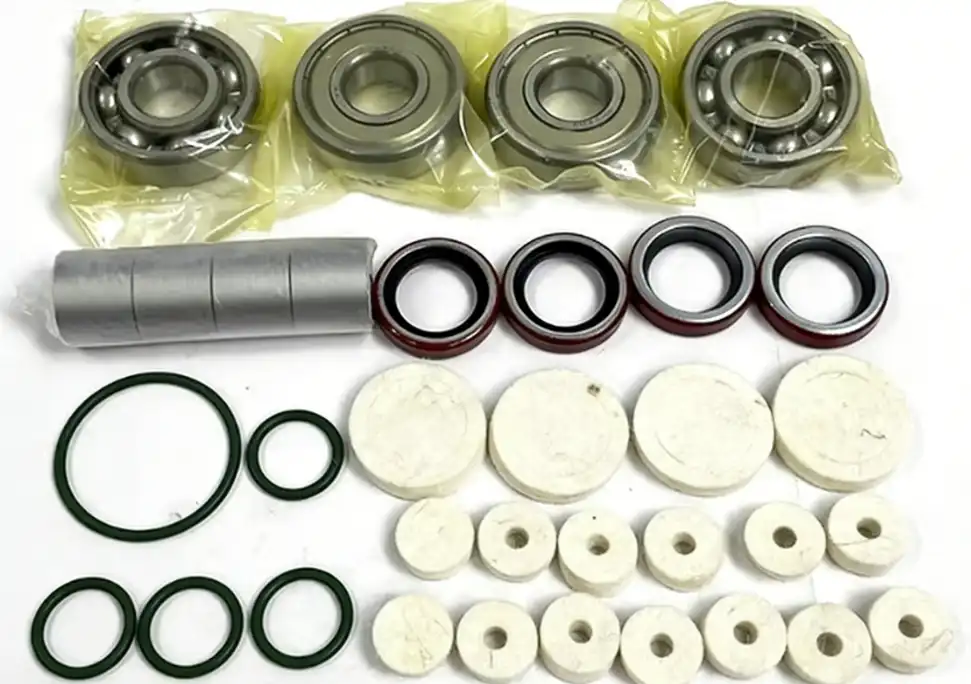
The Edwards A30151820 Module Kit is a comprehensive maintenance replacement solution designed for Edwards EH250, EH500A, QMB250, and QMB500A mechanical booster vacuum pumps. Engineered to restore factory tolerances and prevent vacuum leaks, this all-in-one overhaul kit includes high-precision ball bearings, durable dynamic shaft seals, heat-resistant O-rings, and oil-absorption felt pads for extended operating life.
Keep Your EH/QMB250/500A Pumps Running: Edwards A30151820 Module Kit in Stock

Agri-Core No.1, China’s first homegrown LoongArch agricultural SoC, has taped out. This industrial-grade chip resists heat, corrosion, and vibration, solving import reliance and interface mismatches for reliable farm machinery operation in harsh fields.
China's First LoongArch-Based Agricultural SoC -Agri-Core No.1- Successfully Tape-Outs, Breaking Import Dependence for Smart Farming Chips